


From its beginnings, Buddhism has been a path to freeing the mind. When we speak of the free spirit of Zen, we can ask: Did the Buddha’s community live within the social order of its time, or did it propose another way of life?
Starting from these questions, Lluís Nansen will speak about the free spirit of Zen and the different aspects of the awakened mind. The talk invites us to reflect on the relationship between the Zen path, social conventions, and the possibility of becoming free from them.
The śramaṇas: the world in which Buddhism arose
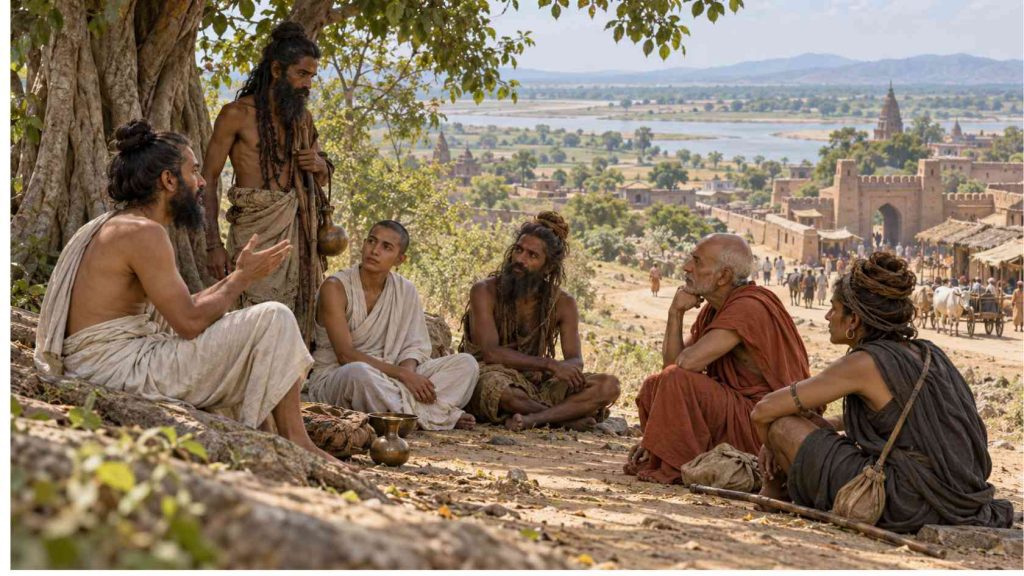
In northern India, various groups of renunciants sought liberation through ways of life and practice that differed from the obligations of household life. The Buddha emerged in this setting of spiritual debate. The śramaṇas did not form a single movement: they followed different teachings and practices. Buddhism shares the ideal of renunciation with these other traditions, while offering its own path. These renunciants lived outside the socioeconomic system of their time. Could they be considered an anti-system movement?
Zen, the Free Spirit: the Zen hermit in the thatched hut
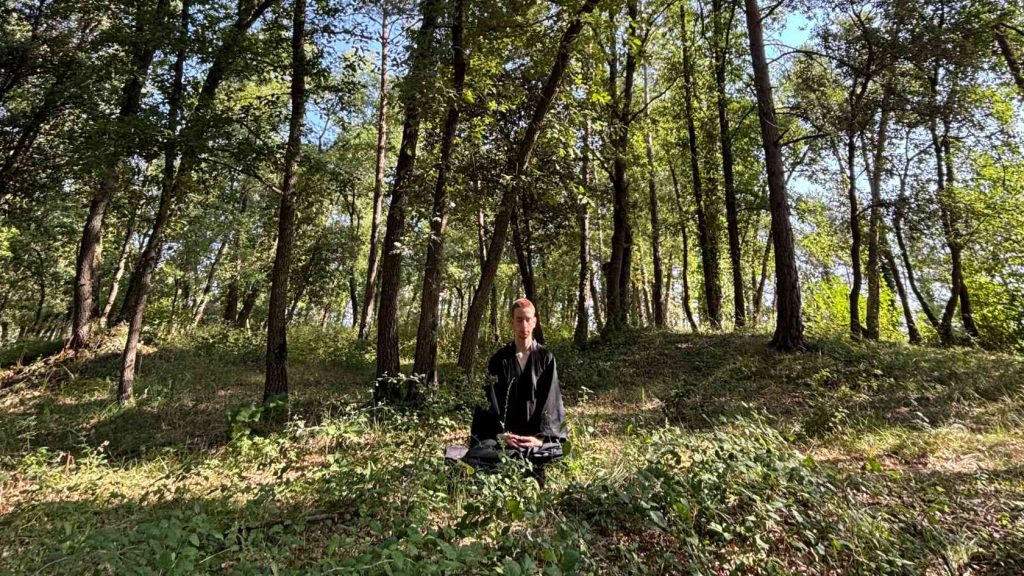
The image of a monk meditating in a simple hut in the forest or mountains expresses an ideal of austere, secluded life. In the Chan and Zen traditions, hermitages and shelters have existed alongside communal practice and life in monasteries. The hut evokes distance from power and possessions, but it does not represent the whole history of Zen.
The hut can symbolize freedom and simplicity, but it does not necessarily mean living without ties: the hermit also belongs to a tradition, has received teachings, and may depend on the support of others. Is it still possible to live as a hermit in a hut today?
Zen, the Free Spirit: the self-sufficient monastery, zazen, work and autonomy
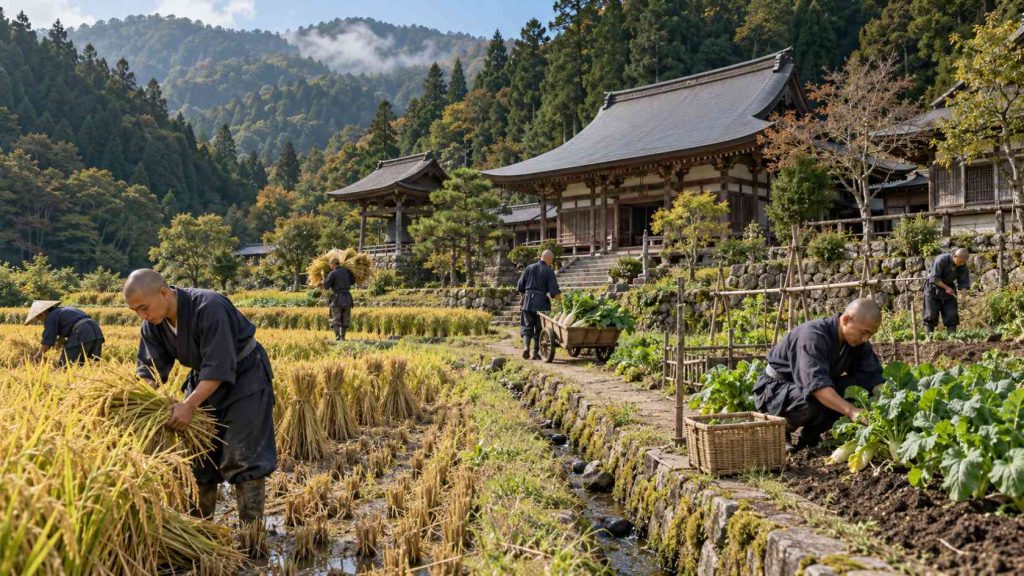
When Master Kōdō Sawaki settled his community at Antaiji, he intended to create a self-sufficient temple where the resident monks and nuns could live from the crops they grew themselves. Antaiji is still a Sōtō Zen temple in the mountains of Japan. Community life combines zazen with farming and maintenance work. The monastery grows rice and vegetables, and work in the fields forms part of daily practice.
We’ll talk about all this, and more, next Thursday.
Zen, the Free Spirit
Talk by Lluís Nansen Salas, Zen teacher
Thursday, 22 October 2026, at 6:30 pm
Biblioteca Arús, 26 Passeig de Sant Joan, Barcelona
Free event. Advance registration required.
Register for the talk Zen, the Free Spirit
Lluís Nansen blog
Thread of light
Buddha-nature is, in itself, impermanence and interdependence. An interdependence with all beings in the Universe….
Sesshin: An Authentic Life Beyond Birth and Death
Sesshin is the intensive meditation retreat at the heart of the Zen Way. For several…
The first awakening is to have few desires
It is easy to feel overwhelmed by the scale of the environmental problems we face….
Meditate more and consume less.
In a small village by the sea, there lived a man named Joan. He was…

Zen Kannon Video by Coreixample
Video by Coreixample This video produced by Coreixample about the Zen Kannon Centre in Barcelona…

Fuse: The Gift of the Dharma
Fuse is a Japanese word that in Zen Buddhism refers to the practice of dō,…