


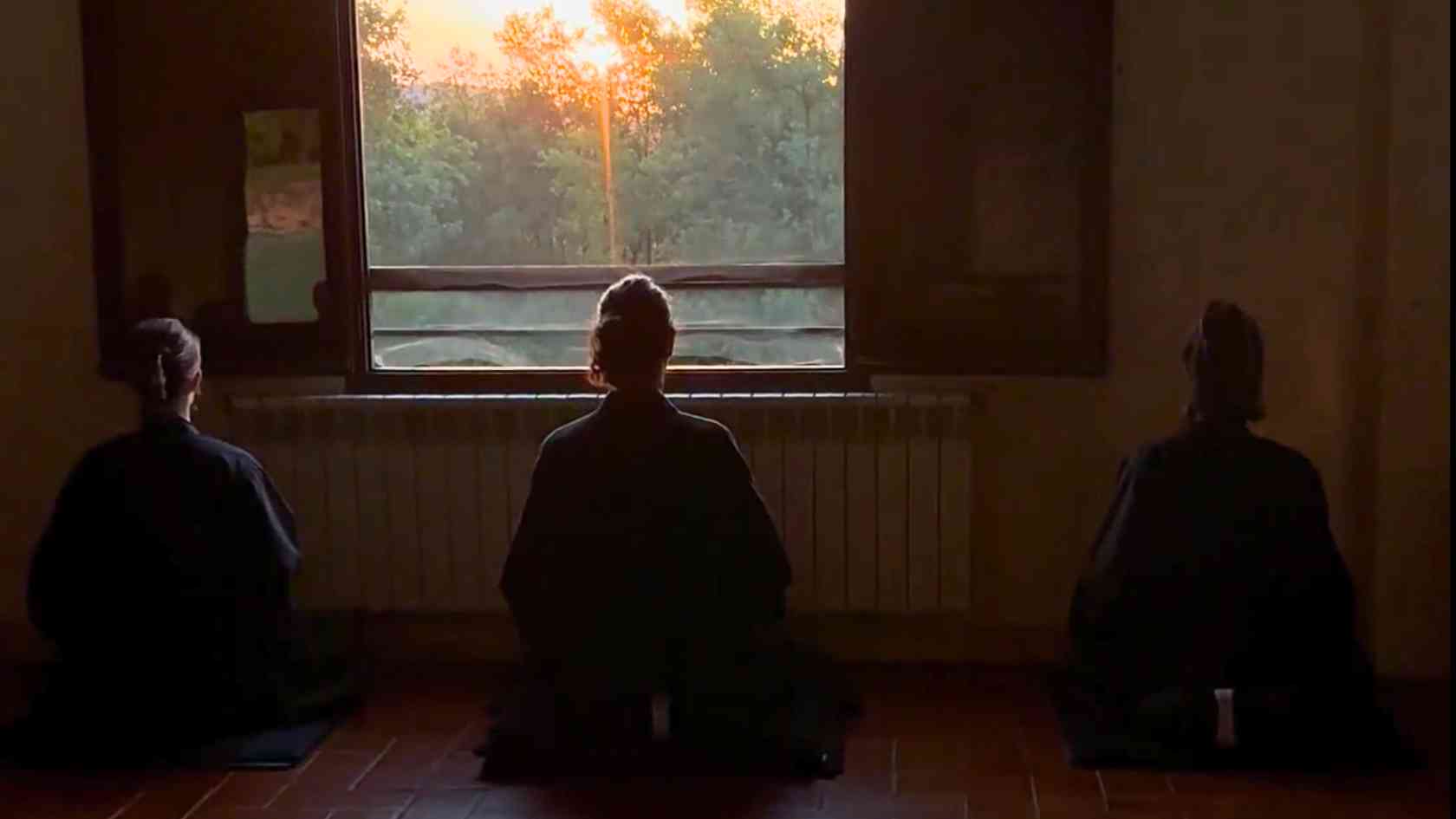
Zen Ango: the summer retreat for deepening practice
Zen Ango is a period of intensive practice during which we temporarily set aside our usual activities in order to immerse ourselves in zazen, silence and community life. It is one of the oldest traditions in Buddhism and an exceptional opportunity to deepen our practice of the Zen Way.
During the Ango retreat, every aspect of life becomes practice. We do not only meditate while sitting: we walk, work, eat, rest and live together with continuous mindful attention. Each activity helps us return to the present moment and experience reality just as it is.
What is Zen Ango?
The Japanese word ango refers to a period of communal practice. Its origins go back to the time of the Buddha, when itinerant monks and nuns stopped travelling during the monsoon season.
For approximately three months, the community gathered in one place and devoted itself intensively to meditation, the study of the Dharma and shared life. In this way, the rainy season became a privileged period for training and spiritual deepening.
In the Zen tradition, this practice has been preserved as the great summer retreat. Traditionally, it lasted ninety days, but today Zen communities organise shorter Angos in order to adapt them to the conditions of contemporary life. They may last one month, several weeks or, as in our case, nine days.
The duration may be different, but the spirit remains the same: to immerse ourselves fully in practice and allow every daily action to express the Way.
What do we practise during Ango?
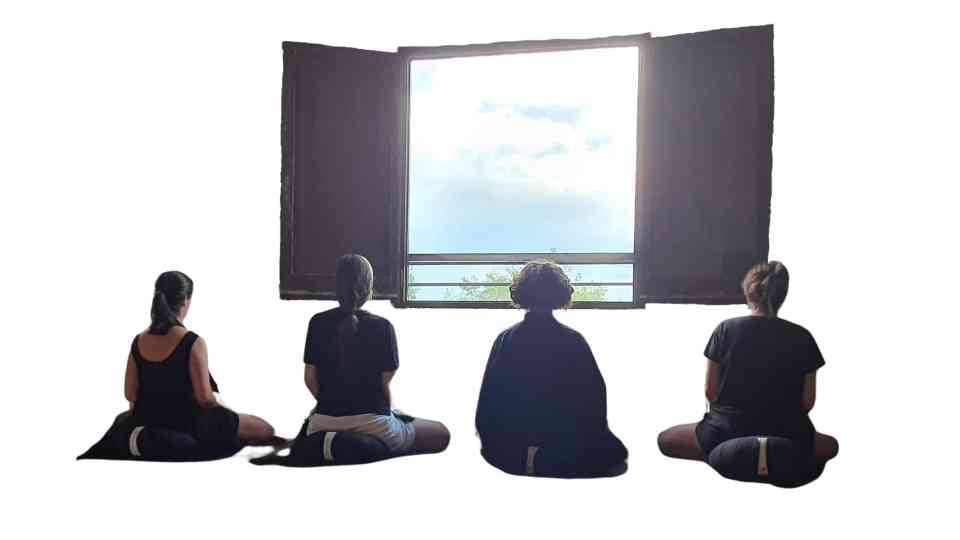
The central axis of Ango is zazen, the seated meditation transmitted within the Zen tradition. All other activities and community life revolve around this central practice. Dharma teachings, Zen rituals, mindful work or samu, and meals taken in silence and with full attention follow one another in a continuous and flowing rhythm.
This continuity allows us to discover that meditation is not separate from life. The same attention we cultivate on the cushion is expressed when we sweep, prepare food, walk through the forest or help another person.
Zen Ango: continuous practice
In everyday life, our attention is often fragmented by responsibilities, worries, screens and constant stimulation. During Ango, we reduce these distractions and simplify our lives.
We follow a shared schedule and do not need to decide constantly what to do next. This structure helps us leave behind, at least temporarily, our habitual patterns and concentrate all our energy on practice.
When we stop constantly feeding our personal story, we begin to see more clearly the thoughts, emotions and conditioning that govern us. We do not try to fight against them or eliminate them. We observe them, accept them and let them pass.
Ango is not an escape from the world, but a way of encountering life deeply, just as it is.
Practising beyond personal limits
The intensity of the retreat means that moments of tiredness, resistance or discomfort may arise. We may discover, for example, a tendency to judge ourselves, compare ourselves with others, try to control the experience or run away when difficulties appear.
But we do not practise alone. The presence of the sangha, the community of practitioners, supports us. When we see others continuing in silence, we too find the strength to carry on.
In this way, effort ceases to be exclusively individual. We practise together and support one another without needing to speak. Each person sustains the practice of everyone else.
This is one of the great strengths of Ango: it allows us to go beyond what we believed to be our limits, without forcing ourselves and without seeking any personal achievement.
Zen Ango and Master Dōgen
Zen Master Eihei Dōgen gave extraordinary importance to Ango. For him, this period was not simply a special activity within the monastic calendar, but a complete expression of the practice of the buddhas and ancestors.
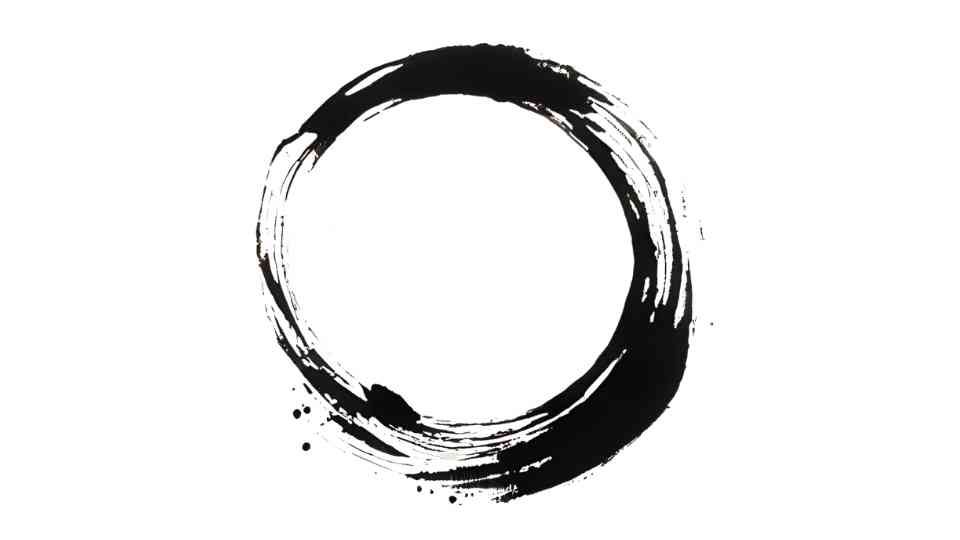
At the beginning of Ango, Dōgen evoked practice as a circle with neither beginning nor end. We do not practise in order to attain enlightenment in the future or to become a different person. We enter the circle of the Way and allow practice itself to transform us.
For an entire week, we can become part of this continuous movement: practising with the whole body, allowing the Dharma to turn us around and awakening, together with all beings, to the reality of this very moment.
Who can take part in Ango?
It is not necessary to be an expert or to have practised for many years. Both experienced practitioners and people with less experience can benefit deeply from Ango.
However, some previous preparation is necessary in order to take part in an intensive retreat. It is advisable to have learned the zazen posture correctly, to practise regularly with a group and, if possible, to have attended a shorter retreat.
This preparation allows the body and mind to adapt gradually to the rhythm of the retreat. It also helps participants understand the forms of practice and approach the experience with greater confidence.
Those who are interested can begin by attending a free introduction to Zen meditation at Zen Kannon Barcelona. From there, the Zen teacher will guide them regarding the most suitable practice and preparation.
Taking part in the Lluçà Zen Ango
Every summer, we hold Ango surrounded by nature in Lluçà, under the guidance of Zen Master Lluís Nansen Salas.
For nine days, we live fully immersed in zazen, silence, samu and the life of the sangha. It is an opportunity to leave behind our usual pace, study ourselves and experience a simpler, more attentive and freer way of living.
The next Ango will take place from 1 to 9 August 2026.
Read all the information about the Ango, the August Zen meditation retreat in Lluçà, or contact us to find out how to prepare and take part.
Lluís Nansen Salas
Autor of Dharma Zen, L’ull de la joiosa revelació, 2019, Viena edicions.
Next zen retreats on the mountain
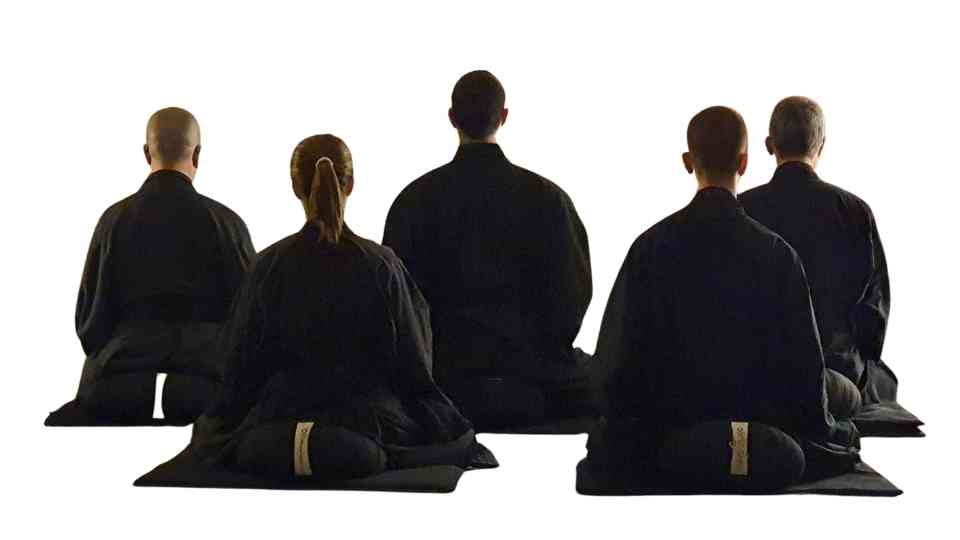
2026/12/05 Zen meditation retreat in December in Lluçà: Rohatsu Zen.
Meditation retreat in December The December spiritual meditation retreat, Rohatsu Zen, is a special celebration…
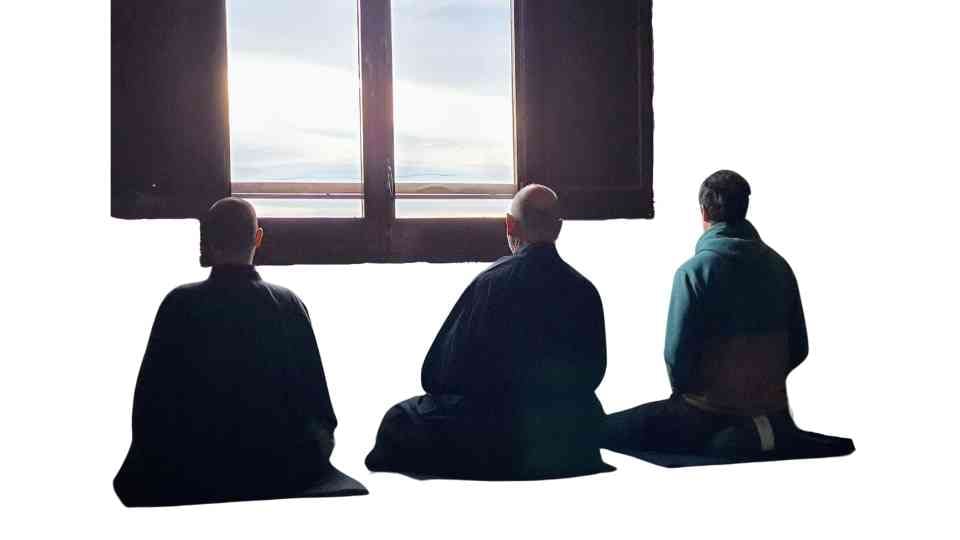
2027/03/26 Easter Retreat. From March 26 to 29
The Easter retreat is a Zen practice stay. This means that, in a countryside house…
2027/08/07 Zen Meditation Retreat. Ango from August 7 to 15.
This year we are once again holding the 9-day August Zen meditation retreat in Lluçà….