


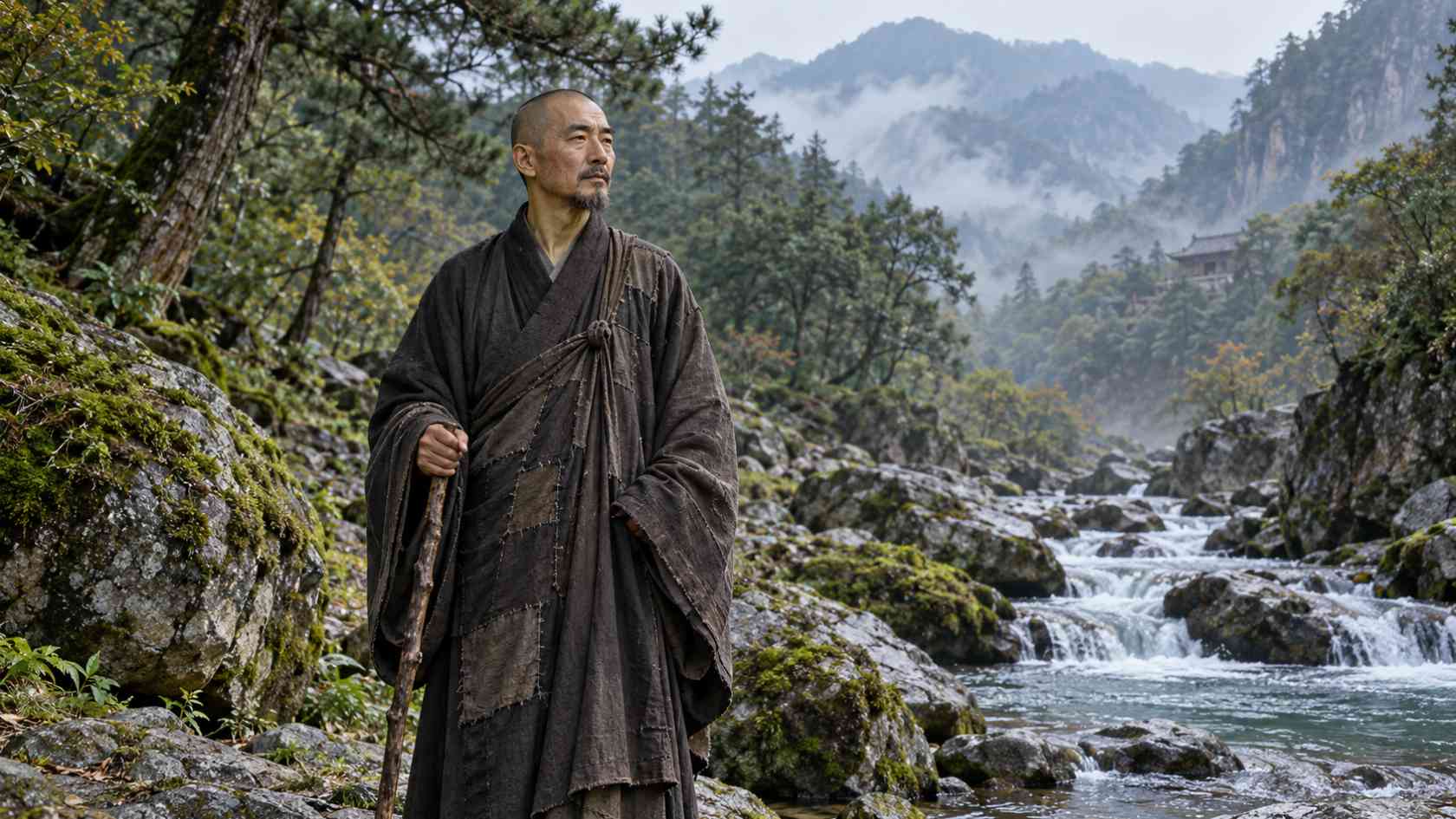
Dongshan Liangjie, known in Japanese as Tōzan Ryōkai, is one of the great figures of Tang dynasty Chan and a pivotal master in the lineage that would later become known as Caodong or Sōtō Zen. His dialogues invite us to discover reality as it is and to express awakening in the midst of everyday life. Tradition attributes the Hōkyō Zanmai, the Samādhi of the Precious Mirror, to him.
Tozan lived during one of the most creative periods in Chinese Chan Buddhism. His life has come down to us through collections compiled later, especially the Record of Dongshan’s Sayings. As with many ancient masters, these sources combine historical details, teaching dialogues, and symbolic accounts. We can therefore approach them from two perspectives: respecting the spiritual force of the tradition while distinguishing it from what can be documented.
Early years and the search for the Way
Tradition places Dongshan’s birth in 807, in the region that is now Zhejiang Province. It is said that he began studying Buddhism at a young age and received full ordination at twenty-one.
Like many Chan monks of his time, he travelled from one monastery to another to meet teachers and test his understanding. He was not seeking to accumulate explanations, but to resolve the questions that arose from practice. He visited important masters such as Nanquan Puyuan and Guishan Lingyou. Guishan later directed him to Yunyan Tansheng, who would become his principal teacher.
His journey reflects a theme that runs throughout Zen: understanding does not mature through study alone. It requires zazen practice, contact with the community, and an honest encounter with someone able to question our blind spots.
Insentient beings expound the Dharma
One of Dongshan Liangjie’s great questions was how so-called insentient beings—the mountains, rivers, trees, and stones—expound the Dharma. This was not a theoretical curiosity. He was asking whether all of reality expresses the teaching, or whether it depends solely on words and human consciousness.
Dongshan put this question to Yunyan. His teacher’s answers did not offer a definition he could hold on to; they urged him to listen in a different way. If we seek the Dharma only in explanations, we stop hearing it in the wind, in the sounds of the street, in the silence of the dojo, and in the body breathing.
This teaching does not attribute human thought to stones or trees. It invites us to let go of the central position from which the self claims to decide where truth can appear. When the mind stops imposing its categories, each phenomenon expresses its nature without concealing anything.
The encounter with the reflection in the water
According to the traditional account, when Dongshan Liangjie took leave of Yunyan, he still carried a question with him: how could he describe his teacher’s teaching? Yunyan had answered with a few simple words: “It is just this.” Dongshan continued on his way. As he crossed a stream, he saw his reflection in the water and suddenly understood what he had been unable to grasp until then. The reality he sought was neither an object before him nor an identity hidden within him. It was the very intimacy of that moment: the water, the reflection, the walking body, and all that made it possible.
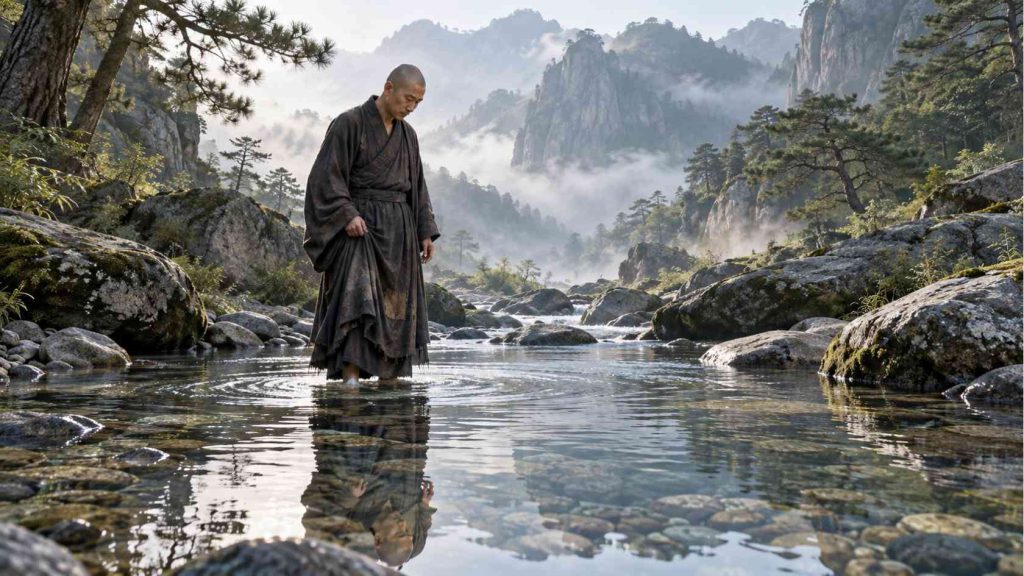
He expressed his understanding in a poem: do not seek the truth in others or consider it separate from yourself; you are not simply this image, yet this image is truly you.
The reflection is not the body, but it does not appear without the body. Dongshan cannot be reduced to what he sees, yet what he sees is not separate from him. This scene would become one of the most fruitful images in his teaching and resonates directly with the mirror in the Hōkyō Zanmai.
“It is just this”: the practice of suchness
Suchness is reality as it is, before we turn it into an idea or divide it into what we desire and what we reject. Saying “it is just this” does not mean resigning ourselves or claiming that everything is fine. It means beginning with a direct encounter with what is here, without turning away from it or immediately covering it with our projections.
In zazen, this teaching takes concrete form. We do not try to become someone else or reach a state we have manufactured. We adjust our posture, breathe, and let thoughts pass. Practice does not add a purer reality to life; it brings us into intimacy with the reality already appearing.
For Tozan, this intimacy does not end on the cushion. It must be expressed in the way we walk, speak, work, and respond to others. If awakening remains separate from ordinary situations, it has not yet been fully integrated.
Tozan ’s Five Ranks: unity and difference
Tozan is also remembered for the teaching of the Five Ranks, developed later within the Caodong lineage. This framework explores the relationship between the universal and the particular, the absolute and the relative, emptiness and forms.
The Five Ranks should not be understood as a hierarchy of spiritual titles. They are dynamic perspectives that help us see how unity manifests within differences, and how differences never leave unity. Practice matures when we stop setting these two aspects against each other and express them together in practice.
This vision would greatly influence both Sōtō Zen and other Zen traditions. It also helps explain why Dongshan often uses images such as the mirror and its reflection, host and guest, light and darkness.
The Hōkyō Zanmai, the Precious Mirror
Tradition attributes the Hōkyō Zanmai to Dongshan, a poem that presents the intimate transmission of suchness and the interpenetration of the universal and the particular. For centuries, the text has been studied and recited as a central expression of the Caodong/Sōtō lineage.
Historically, however, this attribution cannot be considered certain. The poem is documented in the twelfth century, more than two hundred years after Dongshan, and one of the earliest surviving accounts says that he received it from his teacher Yunyan. Later sources associated it directly with Tozan. The most rigorous approach, therefore, is to describe it as a text traditionally attributed to the master and deeply connected with his teaching.
The image of the Precious Mirror captures the heart of his practice: each form is itself and, at the same time, reflects a reality that cannot be divided. You can explore it further on the page for the meditation workshop on the Hōkyō Zanmai.
Tozan and the birth of the Caodong lineage
Dongshan taught during the final years of his life on the mountain that gave him his name. Among his disciples were Caoshan Benji and Yunju Daoying. From this community, the Caodong lineage would take shape as one of the great schools of Chinese Chan.
Centuries later, this tradition reached Japan, where it became known as Sōtō Zen. Eihei Dōgen received it from the master Tiantong Rujing and transmitted it in his own country. The historical continuity passed through complex periods and different institutional forms, but Dongshan remained an essential figure of reference.
A simplified lineage is:
Huineng → Qingyuan Xingsi → Shitou Xiqian → Yaoshan Weiyan → Yunyan Tansheng → Dongshan Liangjie → Yunju Daoying → … → Tiantong Rujing → Eihei Dōgen
Dongshan Liangjie’s final teaching
Traditional accounts say that Dongshan announced his death serenely. When his disciples began to grieve, the master asked them to prepare a meal so they could take their leave without becoming trapped in sorrow. The scene, shaped as a teaching story, shows a compassion that does not deny grief, yet does not turn death into an absolute rupture.
Tozan died in 869. His teaching continued through his disciples, the dialogues that were preserved, and the generations who found in his words guidance for practice.
What does Tozan teach us today?
Dongshan invites us to stop seeking the Way as something far away. Awakening is not an object that a self can possess; it manifests when we become intimate with the present situation and respond from that intimacy.
His question about the Dharma of insentient beings helps us listen to a world that does not revolve around us. The reflection in the water shows us that we are not a closed identity. The Five Ranks remind us that unity does not erase differences, and that the deepest understanding must be embodied in concrete life.
In the stillness of zazen, we can verify this teaching. There is nothing to add to this moment. When we stop trying to grasp it, the Precious Mirror freely reflects all that appears.
Lineage Masters
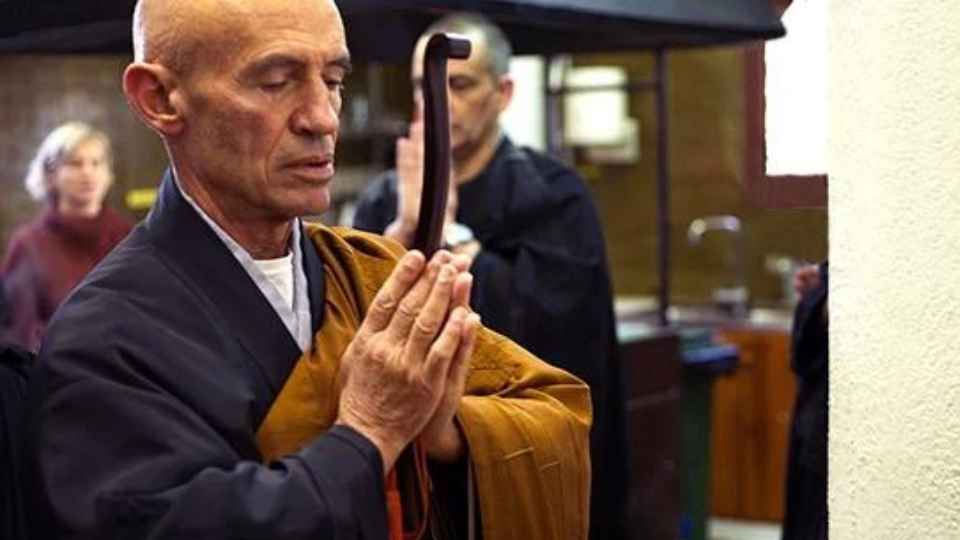
Roland Yuno Rech, Zen Master
Roland Yuno Rech, born in 1944, graduated from the Paris Institute of Political Studies and…
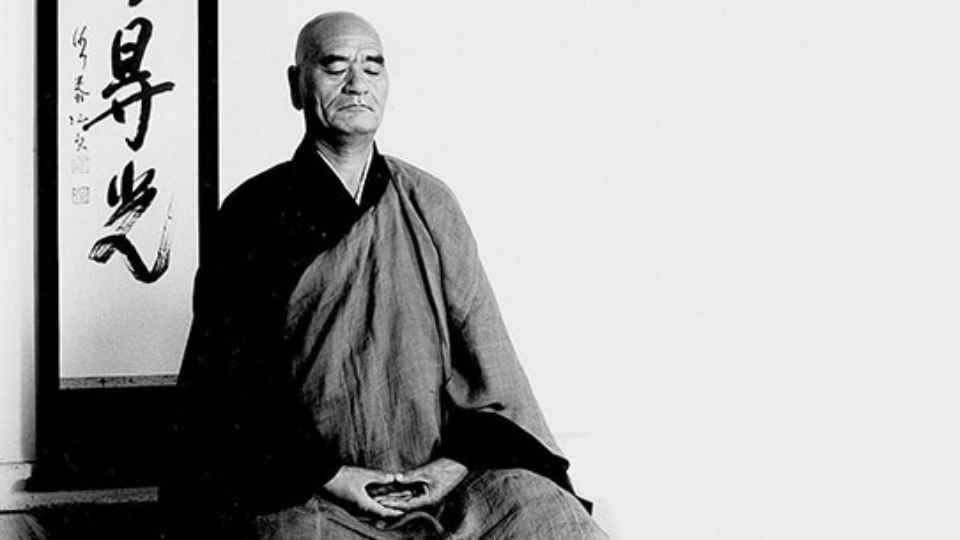
Taisen Deshimaru. The Bodhidharma of modern times
Born in Saga in 1914, Taisen Deshimaru was a disciple of Master Kodo Sawaki, one…
Kodo Sawaki. Homeless Kodo
Kodo Sawaki (1880-1965) was an influential Japanese Zen master, known for revitalizing the practice of…
Eihei Dogen. Author of Shobogenzo
Zen Master Dogen (1200-1253) is one of the most influential figures in Japanese Buddhism, particularly…
Keizan Jokin. 700th anniversary homage
In the history of Zen, there have been especially brilliant masters. One of them is…
Master Sengcan, The non duality principle
Master Sōsan (jp.), Sengcan(ch.), Huike’s successor and Daoxin’s Master, occupies an essential place in the…
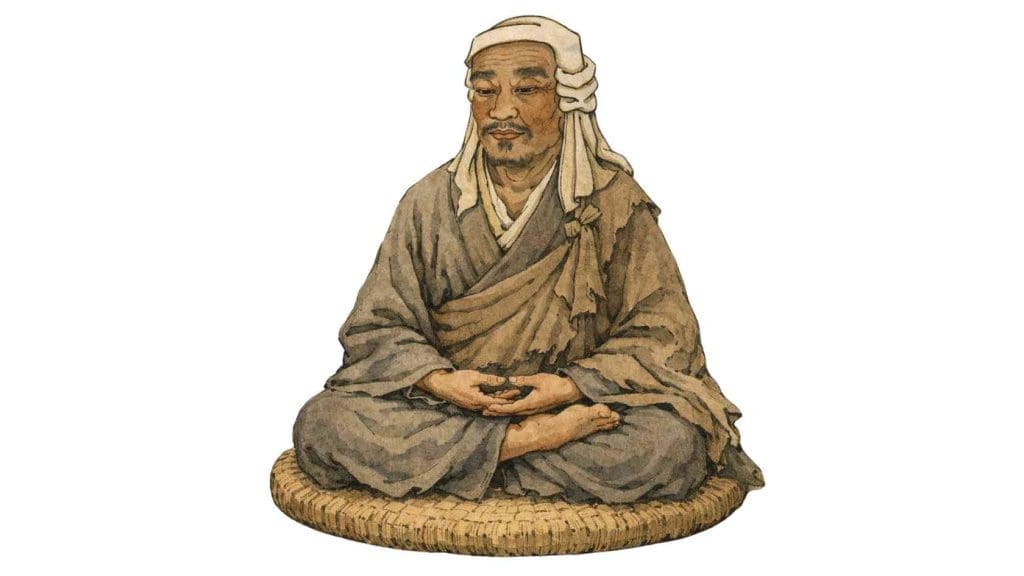
Hui-Neng – Look directly at your mind
Hui-Neng is one of the most important masters in the history of Zen. He lived…
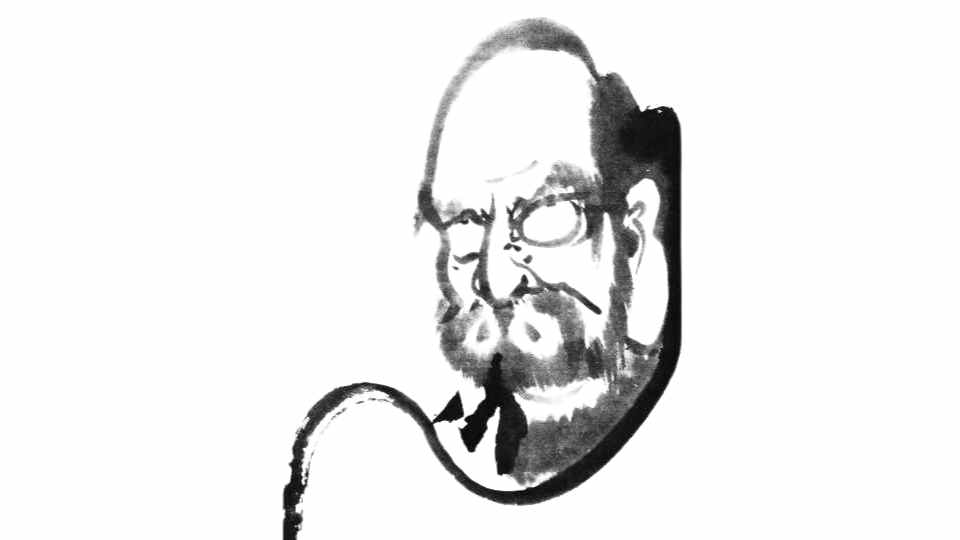
Bodhidharma. Founder of the Zen school
Bodhidharma, often considered the 28th Indian master of Zen and the 1st Chinese master, is…
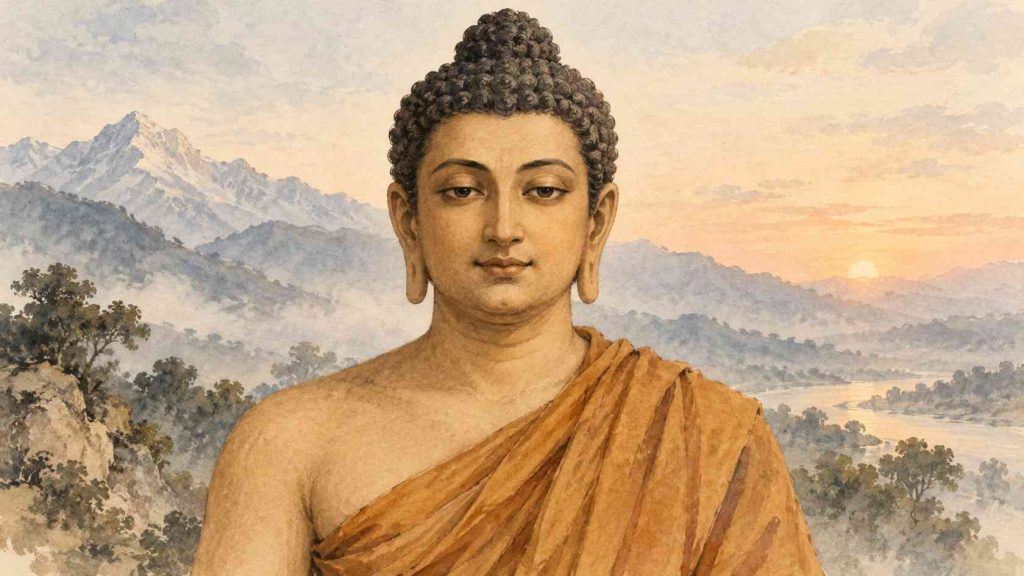
Buddha Shākyamuni – Awake with all sentient beings
Upon seeing the morning star, Buddha Shākyamuni awakened and said, “I awakened together with the…