


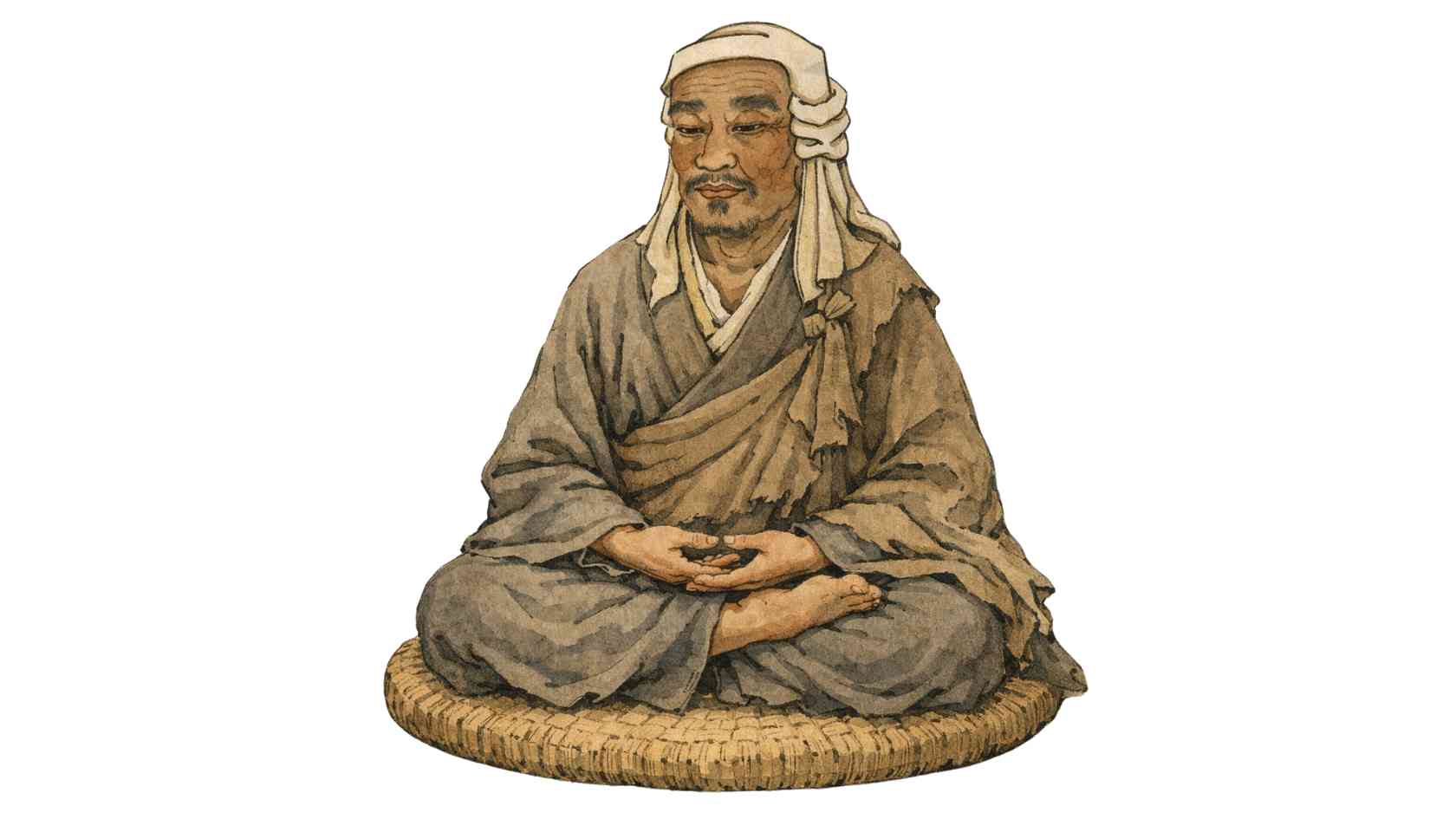
Hui-Neng is one of the most important masters in the history of Zen. He lived in China from 638 to 713 and is known as the Sixth Ancestor of Chan, the tradition from which Zen developed. His biography cannot be fully verified from historical documents. The Platform Sutra and later accounts bring together memories, teachings and stories passed down over the centuries. Yet the life they describe has great power: Huineng shows us that we can humbly follow the Way even in the most difficult circumstances.
Hui-Neng: the humble woodcutter who transformed Zen
The teaching of Zen had begun in China with the arrival of Bodhidharma. In the early years, it was passed from master to disciple along a fragile thread that nearly broke on more than one occasion. It was not until Huineng appeared—known as Eno in Japanese—that Zen spread in every direction. The man who would become the Sixth Ancestor changed the way Zen was understood forever.
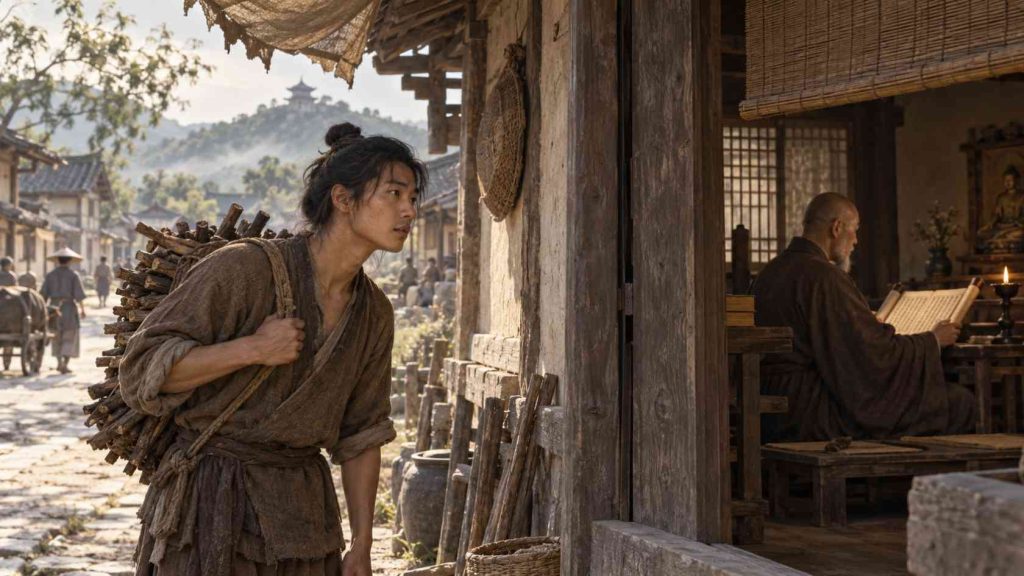
A firewood seller hears the Diamond Sutra
According to tradition, Huineng grew up in a poor family in southern China. His father died when he was young, and he gathered and sold firewood to help his mother. He had not gone to school and could not read the sutras.
One day, while making a delivery, he heard a man reciting the Diamond Sutra. Its words spoke of a mind that does not settle anywhere, and they moved him deeply. What does it mean to live without clinging to what we think, feel or desire? Huineng wanted to understand and decided to seek out Hongren, the Fifth Ancestor of Chan.

At the monastery, Hui-Neng grinds rice
When Hui-Neng reached the monastery, Hongren asked where he came from. On hearing that he was from the south, Hongren asked him a dismissive question: how could a man from that region aspire to become a buddha? Huineng replied that bodies and places of origin may differ, but buddha-nature makes no distinction between people.
Hongren accepted him but sent him to grind rice. For months, Huineng carried out hard, repetitive work, far from the discussions of the more educated monks. He held no important position and had no learning to boast of. In that everyday work, he continued his practice.
Hui-Neng’s story reminds us that practising zazen and attending to the needs of the community are part of the same Way. Samu, voluntary work performed with mindful attention, expresses our understanding of the Way.
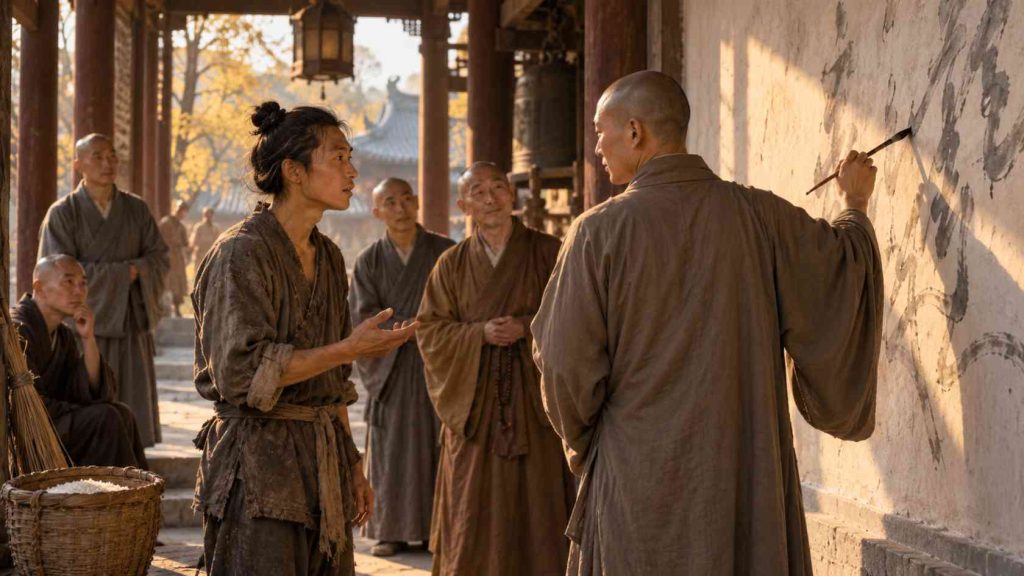
The two poems about the mirror
Hongren asked his disciples to express their understanding of the mind in a verse. Everyone expected a response from Shenxiu, the senior monk. He compared the mind to a mirror that must be cleaned constantly so that dust does not settle on it.
“The body is the tree of enlightenment,
the mind is like a bright mirror;
we must clean it constantly
so that dust does not settle on it.”
Hui-Neng heard the poem recited while he was working. As he could not write, he asked another monk to put his reply on the wall. His verse questioned whether there was a tree of awakening or a fixed mirror to which dust could cling. If we cling to the idea of a self that must become perfect, we remain trapped in that very idea.
“There is no Bodhi tree,
nor any bright mirror;
from the beginning there is nothing:
where could the dust settle?”
The two poems speak about practice from different perspectives. Shenxiu reminds us of the need to clarify the mind day after day. Huineng invites us to see that awakening is not an object we can obtain once we have purified ourselves. Sudden understanding does not do away with daily practice; it transforms it.
This exchange of verses symbolizes two ways of understanding practice, gradual and sudden, which Zen would ultimately see as complementary. The point is not to clean the mind in order to become someone other than who we are, but to see the awakened nature of our mind here and now.
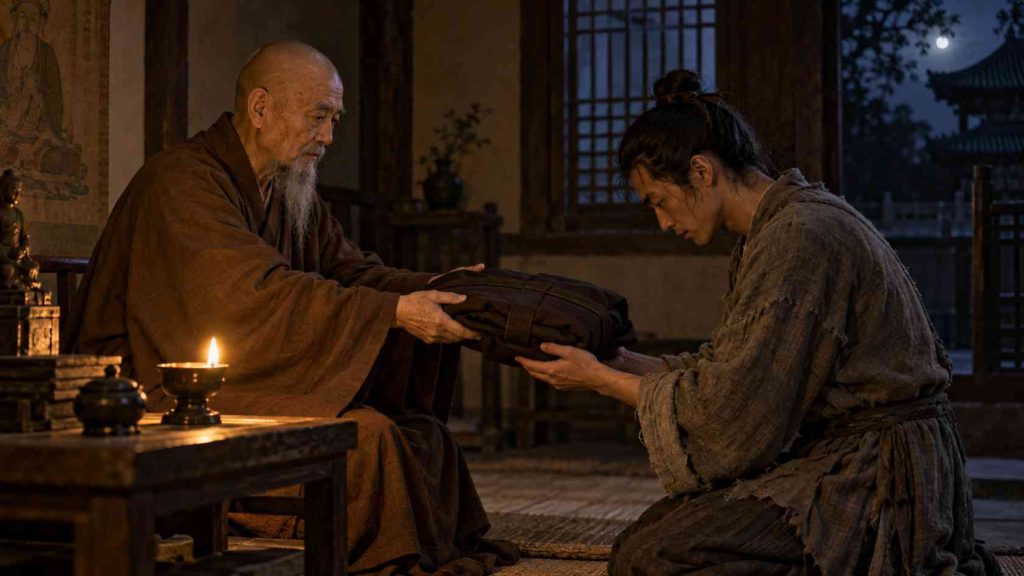
The transmission of the Dharma
According to the Platform Sutra, Hongren recognized Huineng’s understanding, summoned him at night and transmitted the teaching to him together with the lineage robe. He then advised Huineng to leave, because the transmission might arouse envy among the other monks.
Hui-Neng fled south. The story says that several men pursued him to take the robe. Huiming, a former soldier, caught up with him at a mountain pass. Huineng placed the robe on a rock. Huiming, however, ended up asking him for a teaching.
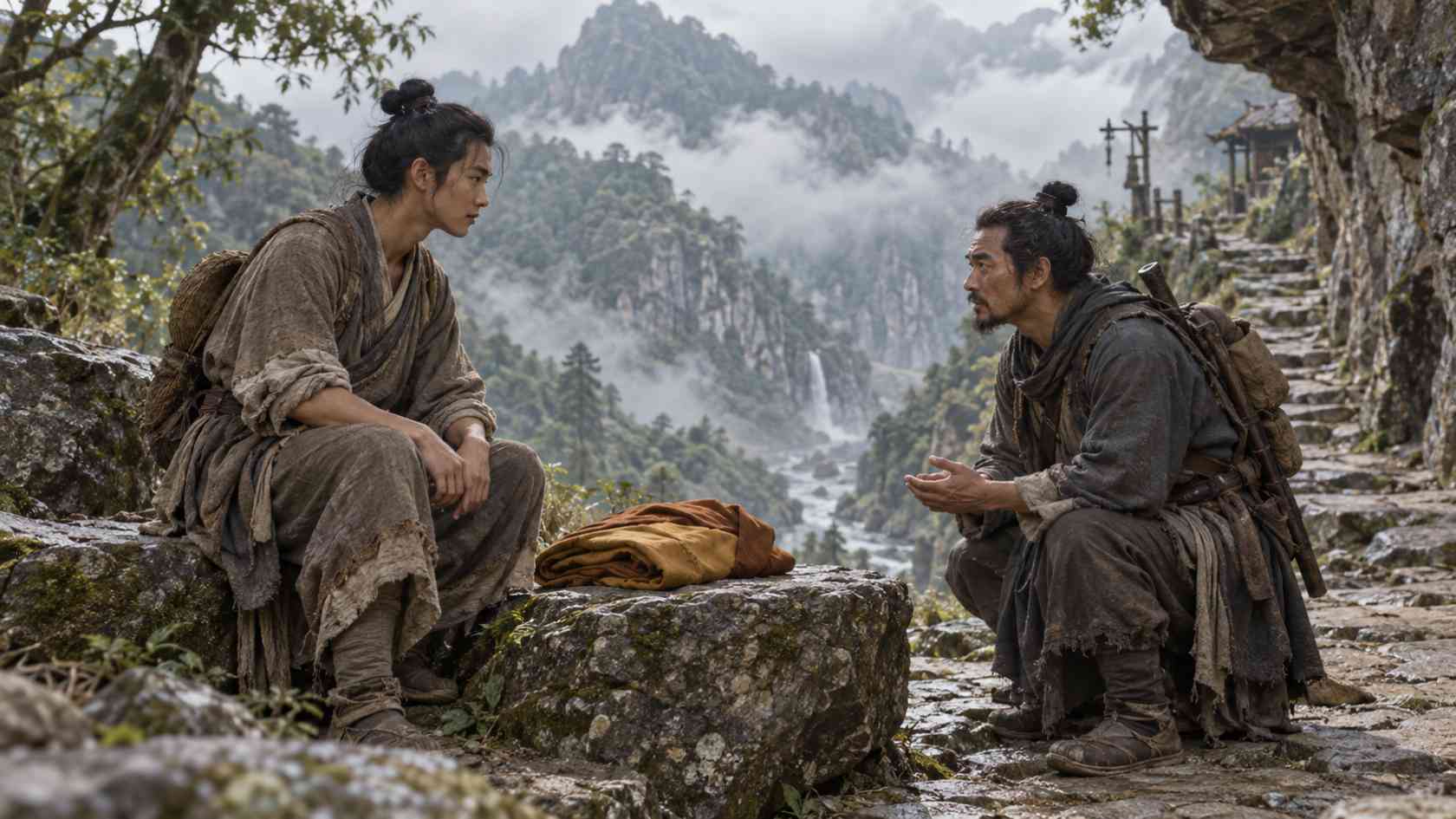
The flight to the south
Hui-Neng invited him to set aside ideas of good and evil for a moment and look directly at his original nature. Huiming had climbed the mountain to obtain a symbol of transmission, only to discover that the Dharma cannot be grasped like an object.
It is one of the most beautiful stories associated with Huineng because it changes the meaning of the pursuit: where there might have been a fight, there is a meeting between master and disciple.
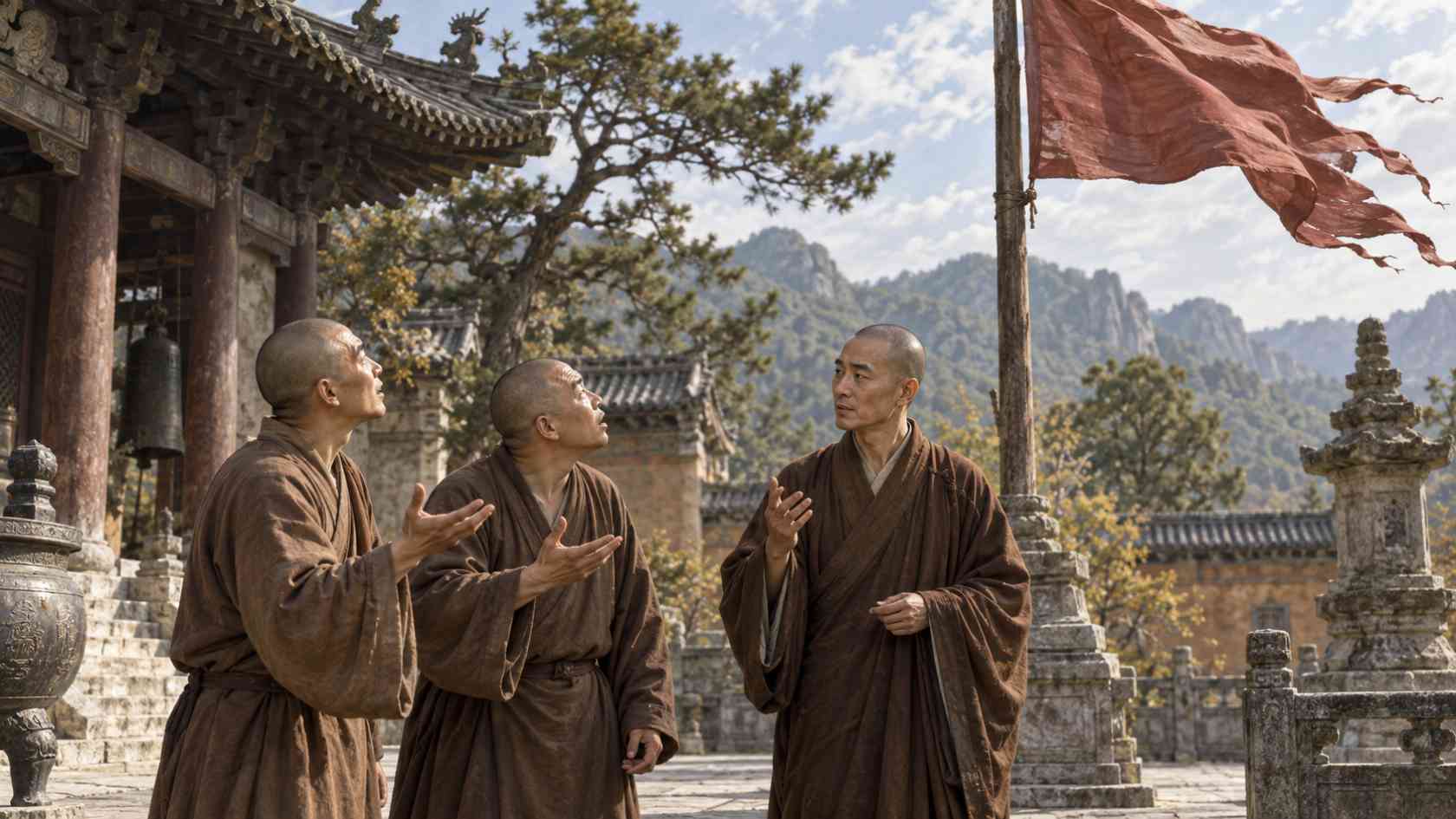
The wind, the flag and the mind
Some time later, Hui-Neng came to a temple where two monks were arguing in front of a fluttering flag. One said that the flag was moving; the other said that it was the wind. Huineng replied that it was their mind that was moving.
He was not telling them that the wind did not exist. He was inviting them to notice what was happening as they defended their opinions. It is easy to get caught up in an argument and lose sight of the situation as it really is. Zen practice helps us recognize the mind as a flow that does not become stuck in any point of view or opinion.
According to tradition, Master Yinzong heard about the exchange, recognized Huineng and presided over his ordination as a monk. The young man who had come to the monastery to grind rice now began to teach publicly.
What does Hui-Neng teach us today?
Huineng insists that buddha-nature is present in all beings. He also teaches that meditation and wisdom, (samadhi and prajna), are not separate. We do not meditate to accumulate merit and receive wisdom later: when we practise without clinging to thoughts, we can see more clearly and act differently.
That is why the “no-thought” Huineng speaks of does not mean making the mind blank. Thoughts appear and disappear. The question is whether we follow them blindly or can let them pass and return to what we are doing. This experience is close to the practice of zazen and mindful attention in everyday activities.
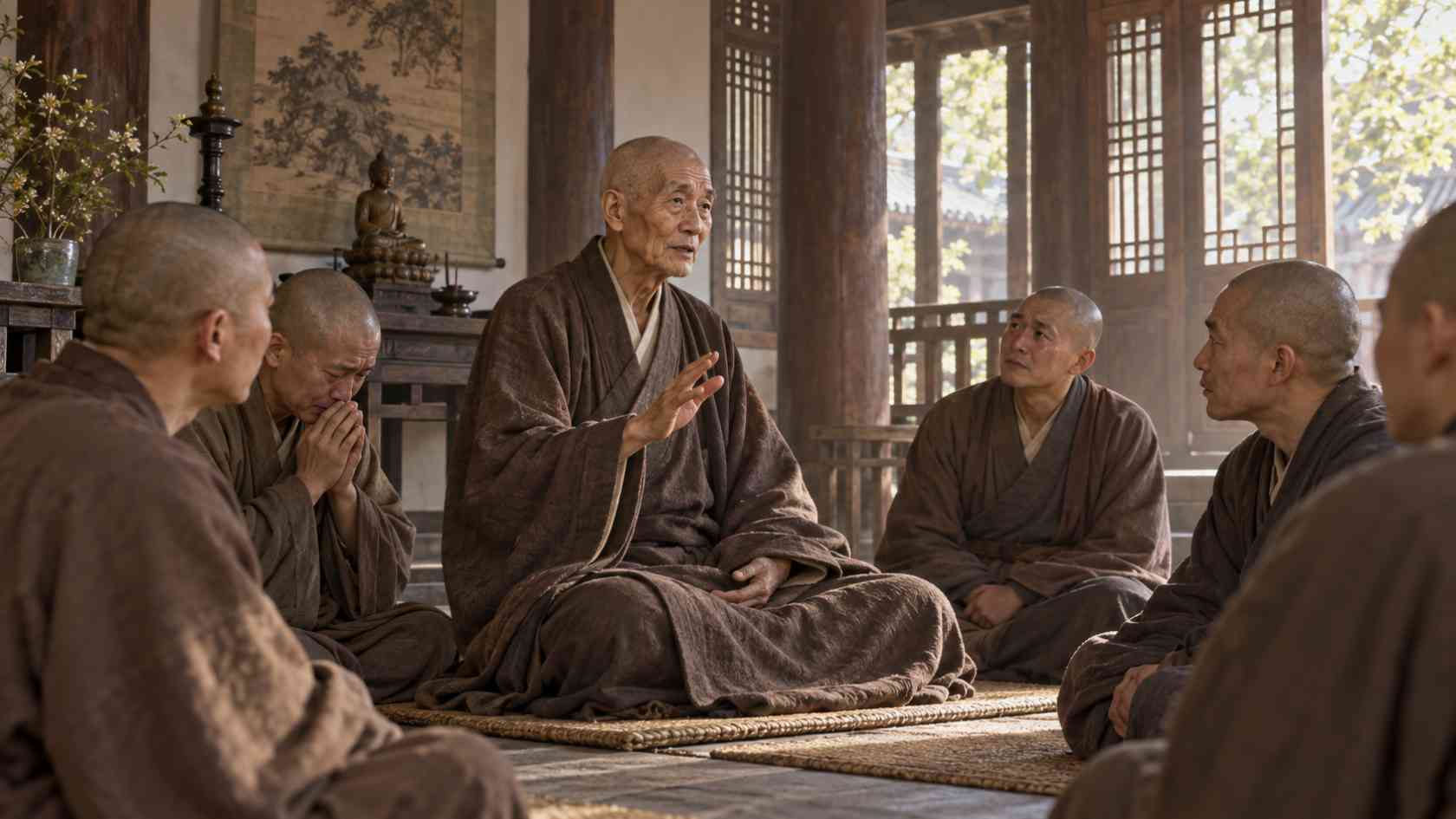
Tradition tells us that shortly before his death, Huineng gathered his disciples to teach them once more. He died in 713, but stories about him continued to circulate, and the Platform Sutra became one of the foundational texts of Zen Budhism.
What can we learn from his life? Perhaps, above all, not to postpone practice while waiting for ideal conditions. Huineng heard the Dharma while working, ground rice at the monastery and found an opportunity to teach even a man who pursued him. We too can practise when we sit in zazen, when we work, when we listen to someone or when we notice that we have become attached to an opinion. The Way begins in this moment.
Nansen
Author of Zen Mediterrani, el despertar universal