


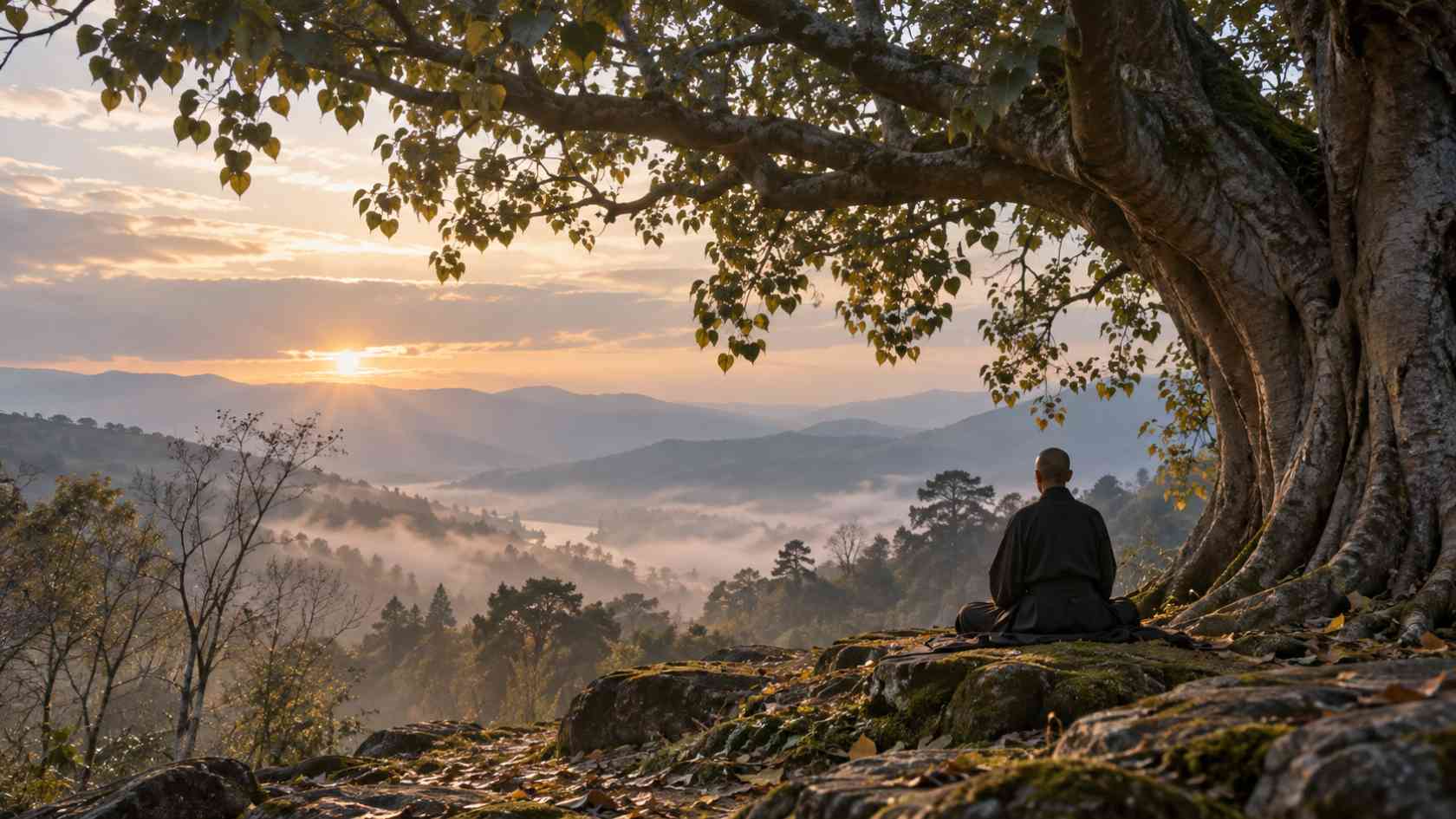
In Japanese, Rohatsu refers to the Zen retreat held in commemoration of the Buddha’s awakening on December 8. In Zen Buddhism, it is traditionally marked by intensive seated meditation and rigorous silence. As the days grow darker and colder at the end of autumn, the season itself invites us to turn inward and contemplate.
This retreat reenacts the Buddha’s epic quest: he sat in meditation beneath the Bodhi tree for six days and six nights before awakening from this world of suffering. This gives Rohatsu a mystical quality, and we practitioners cherish it as one of the year’s finest retreat.
At the beginning of the rohatsu retreat, many thoughts arise, but gradually the mind grows calmer. Concentration deepens, awareness expands, inner dialogue subsides, and thoughts appear farther and farther apart. We may even become aware of the spaces of non-thinking between one thought and the next.
Rohatsu retreat: Dropping Off Body and Mind
During extended periods of zen meditation, such as Rohatsu retreat, we may experience what Dōgen calls “dropping off body and mind.” Dropping off body and mind means forgetting the self. When thoughts disappear, the thinker disappears too, because thought and thinker are two sides of the same reality: they are interdependent, and neither can exist without the other.
This samadhi of no-self is the unified mind experienced by the Buddha when he saw the morning star and awakened together with all beings. As concentration becomes more stable, the resonance of these periods of samadhi—even brief ones—fills our lives completely. The experience of forgetting the self is so profound that samadhi expresses itself in every gesture and every movement: when we walk, listen, or look. Everything we do expresses this joyful samadhi of Rohatsu retreat.
Join us for the next Zen retreat in December and experience Rohatsu fully.