


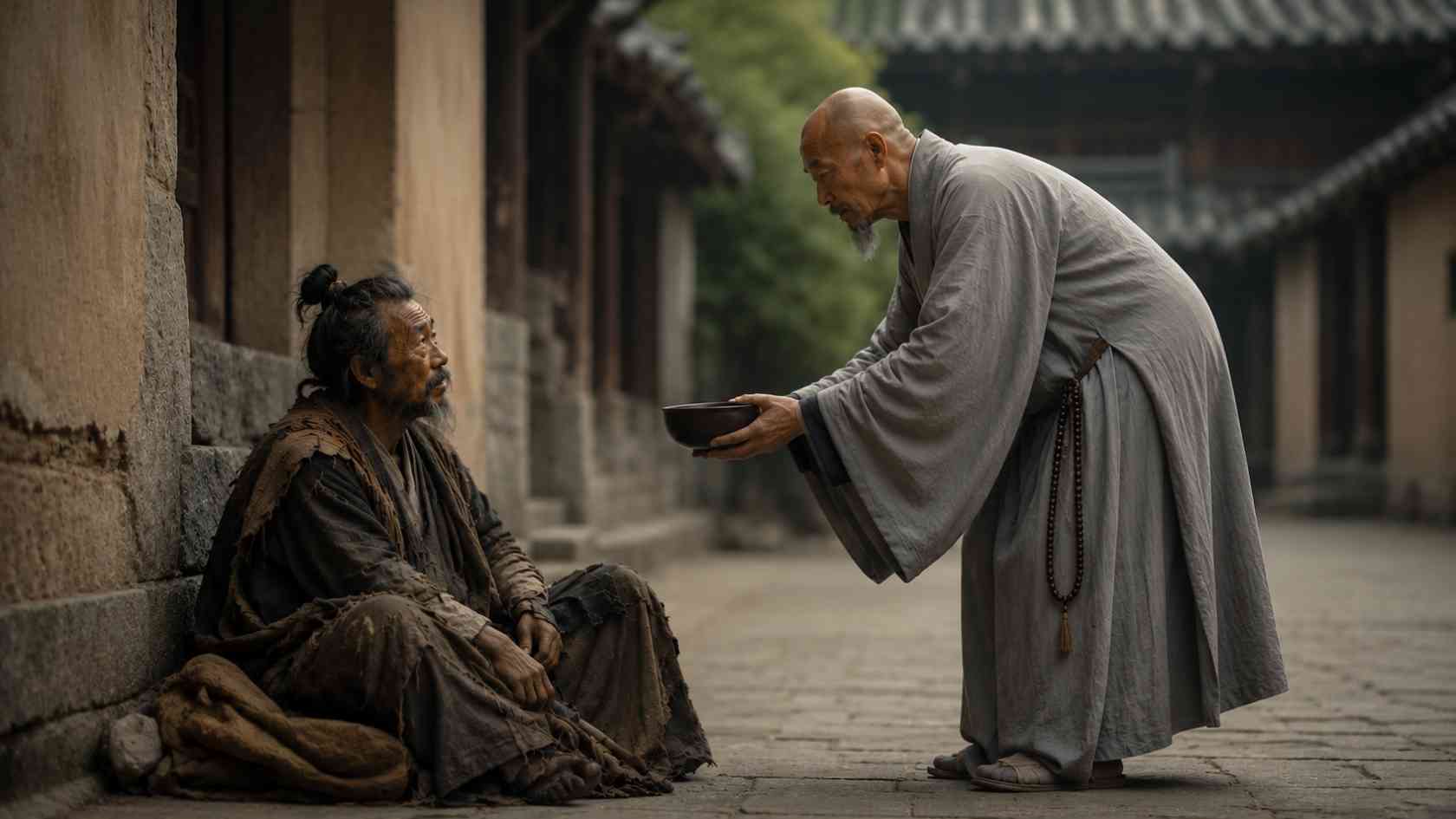
A Zen master travelled through villages and along country roads collecting money to build a temple. He went from door to door, greeting people with a bow and accepting any kind of help: a coin, a handful of rice, or an old piece of wood. His disciples noticed that the master did not only visit merchants or wealthy people. The master also stopped before beggar sitting on bridges and by the roadside.
One day, a disciple could no longer remain silent:
—Master, why do you ask for alms from people who have nothing? Shouldn’t we be the ones helping them?
The master asks alms from the beggar
The master did not answer immediately. He approached an old beggar who had only a few coins before him.
The master bowed and said:
—We are building a temple so that all beings may awaken. Would you like to take part in it?
The beggar picked up a small coin and placed it into the master’s bowl. The disciples felt even more uncomfortable.
As they walked away, one of them said:
—That coin is worthless.
The master stopped and replied:
—For you it is a small coin. For him it is a great offering.
Then he added:
—If a rich man gives a donation from a very small part of all that he owns, while this beggar has given this little coin which is almost everything he has, which offering do you think is more valuable for building a Zen temple?
The disciples remained silent.
There are many stories in Zen reminding us that when we give selflessly, the amount is not important. What matters far more is the spirit with which we give, the effort, and the small renunciation that the act of giving represents for us. All of this is part of the practice of stopping the inertia of the ego.
The spirit of Taisen Deshimaru
Some of these stories feel very close to us. When Taisen Deshimaru founded the Temple of La Gendronnière, some disciples had doubts. The place was enormous, old, and expensive to maintain. Some asked:
—How will we pay for all this?
Deshimaru replied:
—If you practice zazen, everything will appear.
During the first years, many people slept in tents, caravans, or cold half-ruined rooms. Practitioners cooked, built walls, repaired roofs, and chopped wood after zazen.
Deshimaru insisted that the Zen temple had to be built by the sangha itself, not by outside companies.
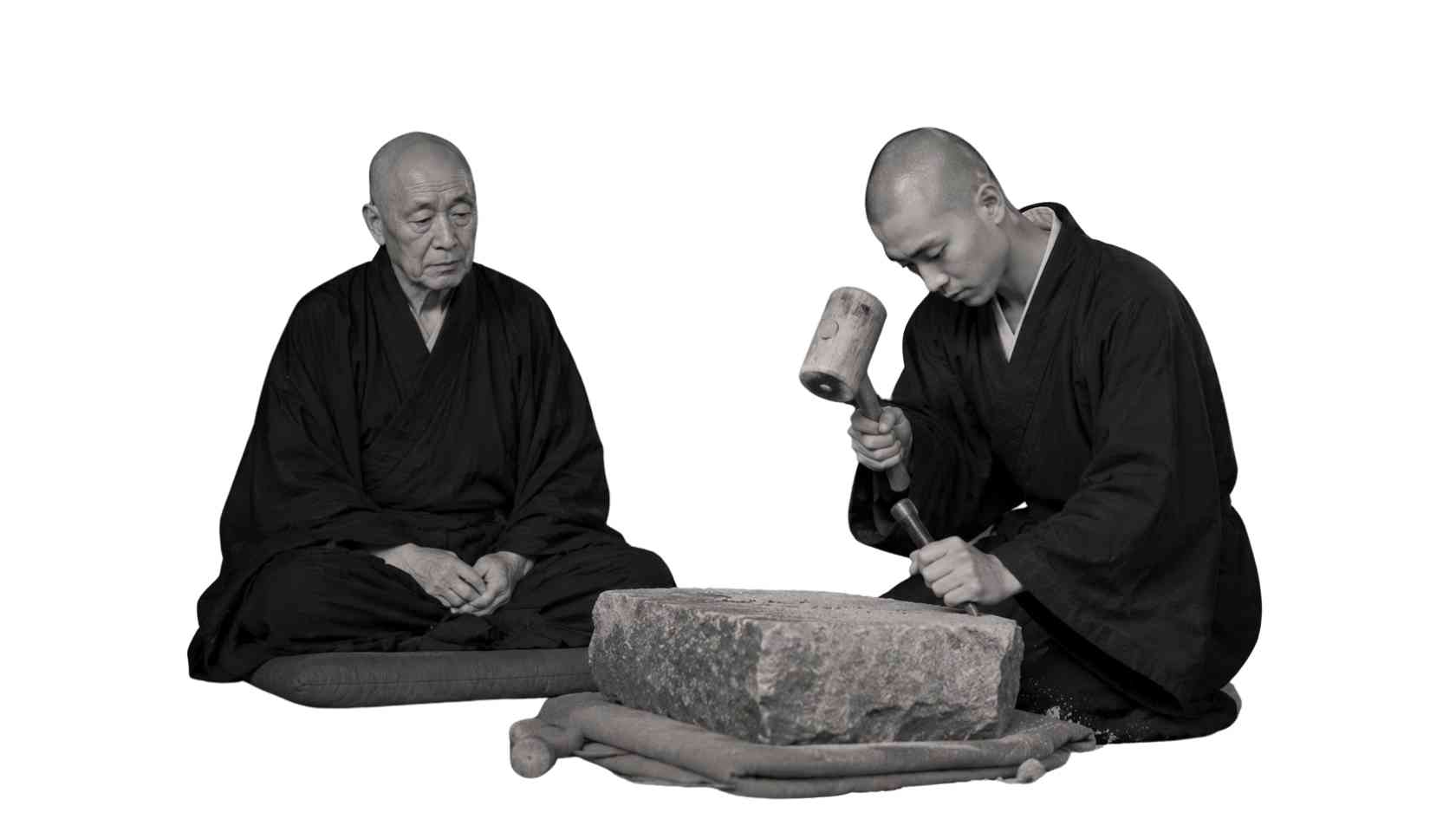
Trusting the inexperienced volunteer
Many of Deshimaru’s first disciples were artists, students, musicians, or Parisian hippies who had never used tools before. Yet Deshimaru still made them build.
And whenever someone said:
—I don’t know how to do it.
Deshimaru replied:
—Do it.
This was an essential part of samu: learning directly through the body. The master explained how to strike with a hammer in the same way he explained the posture of zazen. There was no separation between building the temple and practicing zazen.
Yet, so that nobody would misunderstand, Deshimaru added:
—The true temple is your body and your mind. But we need a place where we can practice Zen together.
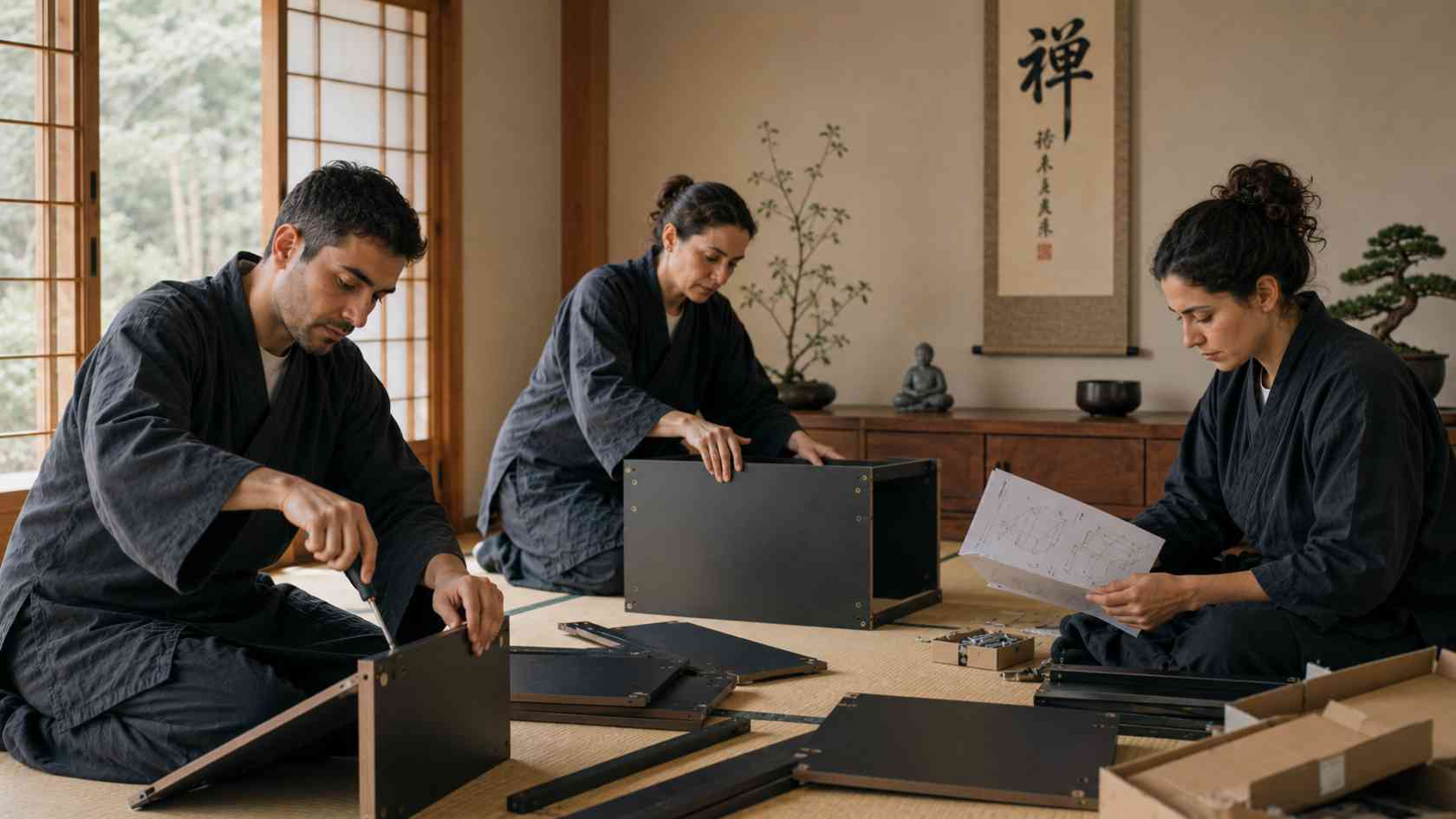
Building a Zen temple with our own hands
Entrusting work to an inexperienced volunteer is, in some way, similar to the tale about the master asking alms from a beggar. Giving what we do not have, doing what we do not know, sharing with those we do not know. The Zen way is not about giving what is left over, nor about doing only what we are already experts at.
Now, at the Temple Zen de la Gran Via, we are renovating the kitchen. Someone might say:
—Installing kitchen furniture is very difficult. Why not hire professional experts? What if we do it badly?
But in Zen, the most important thing is not the material result of the action, but the way we do things, the spirit with which we do them. Acting without seeking recognition or praise for our actions.
If there are tasks we do not know how to do, this is an opportunity to awaken beginner’s mind. If we make mistakes and do things badly, we can do them again: this is a lesson in humility. If we think we have no time because of other commitments, this is an opportunity to reflect on what we are dedicating our time to and whether we are truly satisfied with what we are doing.
Very often we act out of inertia, conditioned by society, without truly being satisfied with what we are doing with our lives.
The master and the beggar are one
This transformation of our life — abandoning old habits and awakening to a mind free from conditioning — is sometimes very complex and takes time.
Yet you will soon realize that the experience of building a temple together with the Sangha will become one of the most unforgettable moments in the practice of Zen. The things that happen, the situations that arise, are what will shape our path as Zen practitioners.
Nansen