


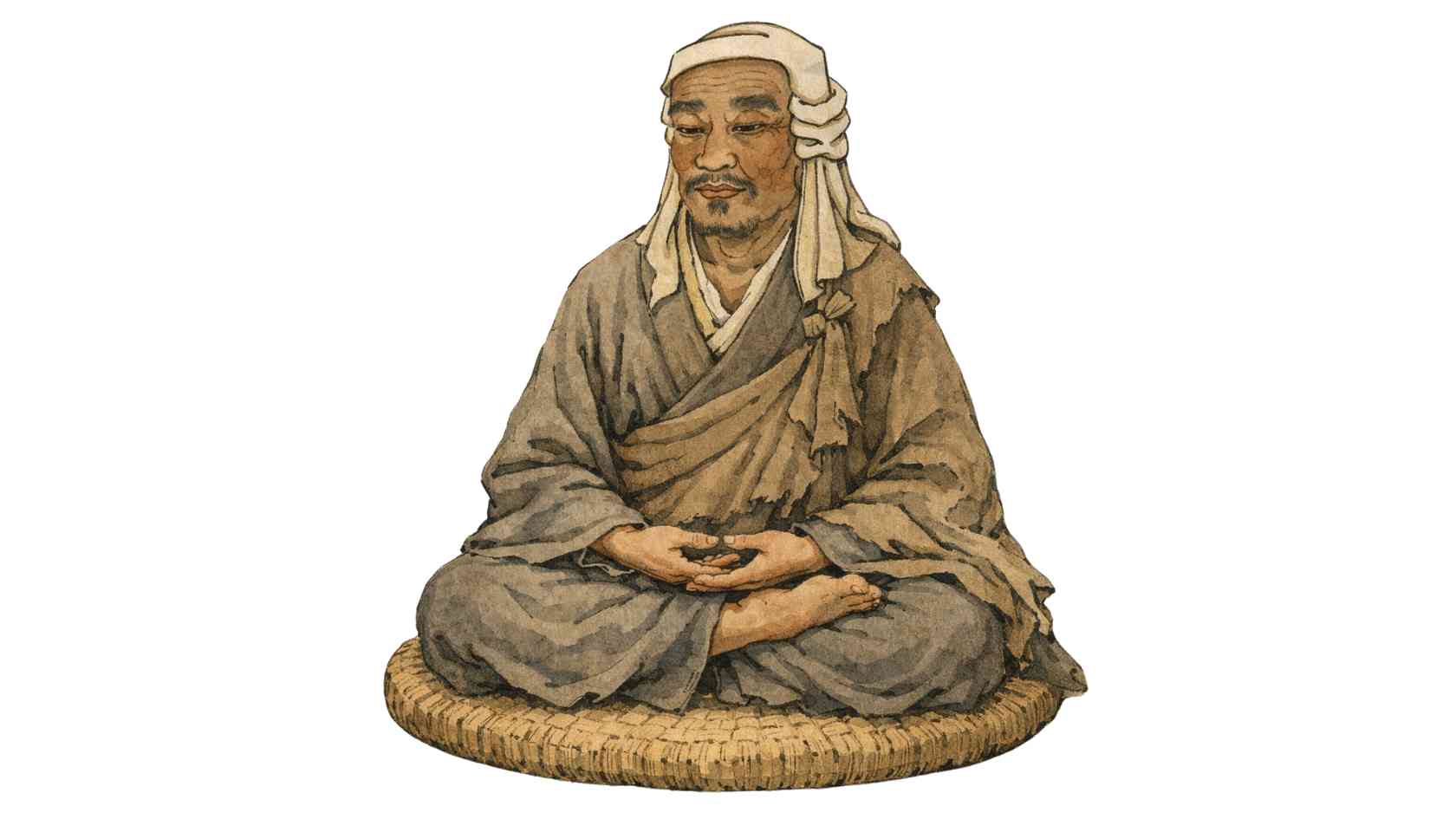
Tribute to Hui-Neng (Eno, jp.): In mid-February, in the Fort Pienc neighborhood, as in other places, the arrival of the Chinese New Year is celebrated. Along with the Chinese community, cultural organizations from Catalonia also take part.
Zen originates in China
The teaching of Zen began in China with the arrival of Bodhidharma. During the early years it was transmitted from master to disciple through a fragile thread. It was not until the appearance of Huineng (Eno in Japanese) that Zen spread in all directions.
The Chinese Sixth Ancestor Hui-Neng (Eno, jp.)
On the occasion of the Chinese New Year celebration, we will dedicate a ceremony to Hui-Neng and to all the Chinese Chan masters. Huineng, the Sixth Ancestor, transformed forever the way Zen is understood.
His life itself is already a teaching. The young Huineng lived by gathering and selling firewood; he came from a very humble background and was illiterate. As he explains in the Platform Sutra, his mind became instantly clear upon hearing verses from the Diamond Sutra saying that the awakened mind does not abide anywhere. This inspired him to practice Zen.
The Platform Sutra of Hui-Neng (Eno, jp.)
The Platform Sutra of Hui-Neng (Eno, jp.) is one of the most influential texts of Chinese Zen Buddhism because it urges us to see our own nature directly. Historically and symbolically, Huineng represents the turn toward a direct Zen: experience before scholarship, practice before ideas. Later traditions regard him as a decisive figure in the consolidation of Zen in China.
One of the best-known stories about Hui-Neng is the poem contest held at the monastery of the Fifth Ancestor. The head monk, Shenxiu, wrote:
“The body is the tree of enlightenment,
the mind is like a bright mirror;
it must be constantly polished,
so that dust does not settle.”
This poem expresses a gradual path of purification. According to the traditional account, Huineng dictated his poem for a monk to write on the wall:
“There is no Bodhi tree,
nor any bright mirror;
from the beginning there is not a single thing,
where could dust settle?”
This poetic dialogue symbolizes two ways of understanding practice: gradual and sudden, which Zen ultimately sees as complementary. It is not about cleaning the mind to become someone different from what we are, but about seeing, here and now, the awakened nature of our mind.