


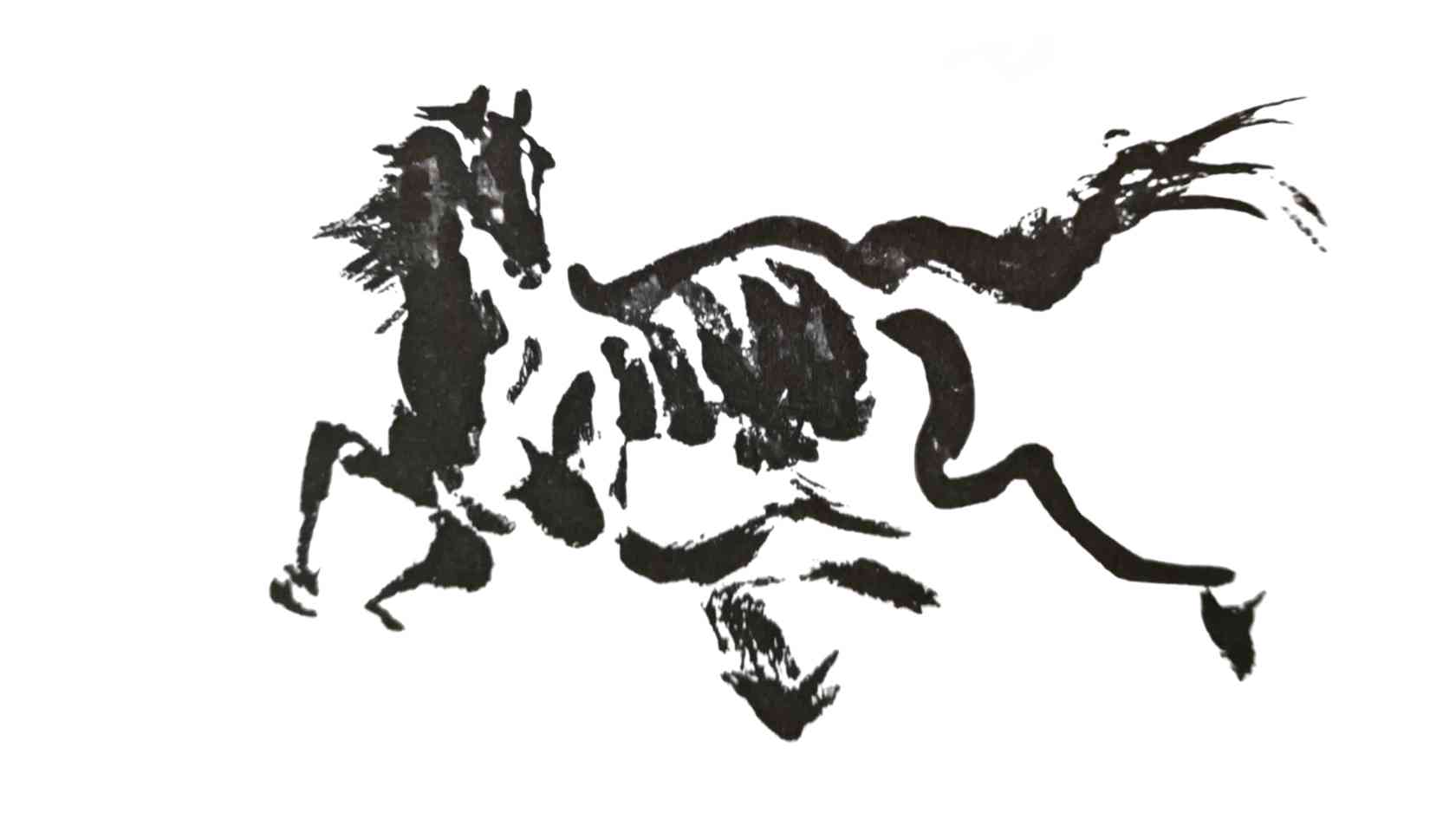
To explain the differences in capacity among his disciples, the Buddha used the simile of the four types of horses. Other masters have also spoken about this.
Master Sekito says: “In the ordinary world there are people of different capacities, but in the Way there is no distinction between people from the north and people from the south.”
“The difference between people from the north and the south” refers to Eno’s dialogue with Master Konin. When Eno arrived at the monastery, Konin asked him: “Where do you come from, and what are you seeking here?” Eno replied: “I come from the south to realize my Buddha-nature.” The master said: “People from the south do not have Buddha-nature.” Eno replied: “There may be people from the north and people from the south, but we all have Buddha-nature.”
In China at that time, just as in Europe today, these differences between north and south were also social and cultural differences: a wealthier and better-educated north, and a poorer south with fewer opportunities. This dialogue raises a very interesting question: to what extent are our preparation, capacities, and abilities in the ordinary world important for following the Zen Way?
Eno’s answer, repeated by Sekito, is explicit: in the Zen Way there is no difference between people from the north and people from the south, no difference between people of greater or lesser ability, or between people with more or fewer resources in the ordinary world. But if ordinary ability is not what matters, then what does matter? Why do some attain the Way while others do not?
The four types of horses
The Buddha spoke of four types of horses: the one that begins to gallop when it sees the shadow of the whip; the one that starts moving when the whip touches its skin; the one that begins to run when the whip penetrates its flesh; and the one that only starts when the whip reaches its bones.
With this parable, he expressed the different degrees of sensitivity among his disciples when it came to giving rise to the spirit of awakening, the impulse to attain the Way by practising with others.
Some people give rise to the spirit of awakening when they hear that someone has died in a neighbouring village; others when death strikes their own town; others when death touches their own family; and finally, there are those who only feel personally concerned when death knocks at their own door. (Here, death means impermanence, loss, separation, illness, old age, and death itself.)
The Buddha uses the image of horses because they represent the strength, momentum, and effort we bring to the practice of the Way. The more energy we give, the stronger and deeper this realization becomes. For realization resides in practice itself, in giving oneself completely to the Way.
This momentum is sometimes lost by students of the Way when they allow themselves to be seduced by siren songs and end up going round in circles, like a donkey tied to a millstone. From birth to death, life changes very quickly. Let us not waste our time on vain pursuits. An ancient master said: practise as if a fire were burning on top of your head.
Nansen
Watch the short video on the four horses and the complete teaching